
Ageing in place is what most people want: to stay in their own home as they get older. Most of the time the house cooperates. Then something changes: a fall, a new walker or wheelchair, a partner who now needs help in the shower. Suddenly the family home has one room that no longer works, and it is nearly always the bathroom.
A step-in shower. A door too narrow for a chair. No room for a second person to help. A toilet in a corner with no space beside it. The rest of the house is fine, but you cannot age in place in a house you cannot wash in.
This article sets out the four realistic options when the bathroom is the problem and the house cannot be changed, or cannot be changed quickly enough.
On this page
Why the bathroom is where it breaks down
Bathrooms are small, wet, and built around plumbing set into a slab. Widening a door, removing a hob, moving a toilet or creating turning space usually means a builder, a plumber, possibly an engineer and a council, and several months. Along the way the household is without a bathroom.
Some homes cannot be modified at all in any practical sense. Rented homes need the owner’s consent. Strata and heritage properties have rules. Older homes with plumbing in the slab can make a level-entry shower impossibly expensive. And sometimes the person needs a working bathroom this month, not next year.
Option 1: modify the home
If the home can be modified, this is the long-term answer. An occupational therapist assesses what is needed, a builder who understands access design does the work, and government programmes may contribute to the cost depending on eligibility. Home modification support is available through aged care programmes for older Australians, and an NDIS plan may fund modifications for a participant. Your assessor or plan manager can tell you what applies in your case.
The limitation is time. Assessment, approval, quotes and construction can take many months, and during the works the bathroom may be out of action.
Option 2: equipment in the existing bathroom
Shower chairs, over-toilet frames, grab rails on existing walls and hand-held showers can make a standard bathroom workable for a while. They are quick and inexpensive, and an occupational therapist can advise on what suits.
The limitation is the room itself. Equipment does not widen a door or remove a hob, and it takes up space in a room that had none to spare. For a wheelchair user, or for anyone who needs a second person in the bathroom with them, equipment alone often does not get there.
Option 3: move
A move to an accessible home, a retirement village or residential care solves the bathroom. It also removes the person from their street, their neighbours, their garden and their routine, which is the whole point of ageing in place. For many families it is the option they are trying to avoid, and it should not be forced by a bathroom.
Option 4: bring an accessible bathroom and bedroom to the property
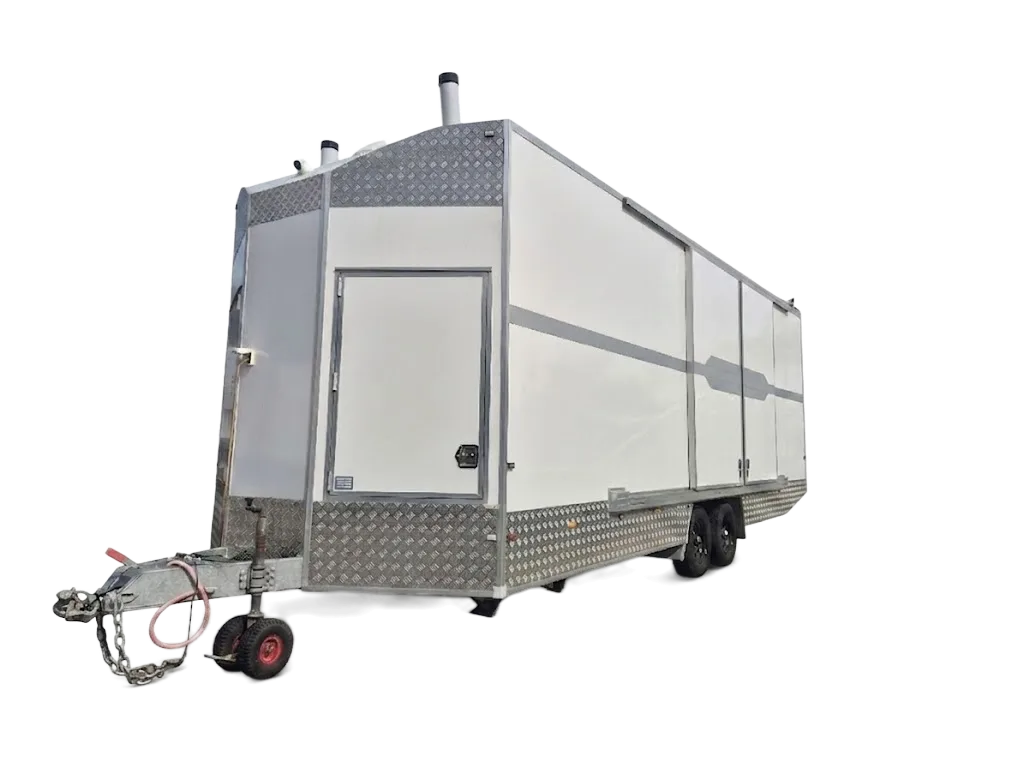
The fourth option is newer. Instead of changing the house, place a purpose-built accessible unit beside it, on the driveway or in the backyard, for as long as it is needed.
Our Mobile Access Facility™ (MAF™) is a road-transportable accessible unit about the size of a large caravan. We tow it to the property, level it, connect it to power and water, and set it up. Inside is a bedroom with a height-adjustable bed and a fully accessible bathroom: a zero-threshold shower you roll straight into, a fold-down shower seat, grab rails, an accessible toilet, slip-resistant flooring and temperature-limited hot water. Every doorway is 840 mm clear at minimum and the turning circle is 1500 mm. Entry is by a powered platform lift at the side door, rated to 300 kg, with steps and a handrail at the rear.
The person stays at home. Their care providers visit as they normally would. The family still has the main house. And when the modification is finished, or the need changes, the unit leaves.
It suits several situations:
- During a home modification, so nobody is without a bathroom while the builder is in
- After a hospital stay, when the house is not ready and the person is
- For a visiting relative who needs accessible facilities the house does not have
- As a long-term arrangement, by buying a unit, where the house cannot be modified at all
What the property needs
A level space for the unit with vehicle access for delivery, a power supply, a water connection and a waste connection (the unit also carries its own fresh water tank). Placing a caravan or transportable unit on a residential property is governed by local council rules, and the rules differ between councils, so check with yours early. We can help with what to ask.
Who it is for, and who it is not for
The MAF™ is designed for physical access needs. It suits guests who can operate the lift and doors themselves, or with a carer they bring. We provide the accommodation and the equipment only. We do not provide care, nursing or supervision, and we do not ask for or hold any health information. We publish the unit’s measurements so that you and your care team can decide whether it suits.
Funding
We work with individuals who may receive NDIS funding. A unit of this kind is high-cost assistive technology, so a funded purchase usually needs an assessor’s report, a written quote and approval before it proceeds; a hire or trial arrangement is often simpler. Speak with your plan manager or support coordinator about what your plan allows. For older Australians, ask your aged care assessor what your programme can contribute towards.
Next step
See the published specifications and measurements on The MAF™ page, or tell us about your situation and we will explain what is possible. We reply within one business day.
Families can buy a MAF™ for home, or hire one for up to three months while the house is being sorted out: see the Buy and Hire pages.
Fortitude Essentials™ does not make medical claims. We do not diagnose, treat or prevent medical conditions. Please consult a qualified healthcare professional, such as an occupational therapist, for advice about your own or your family member’s requirements.